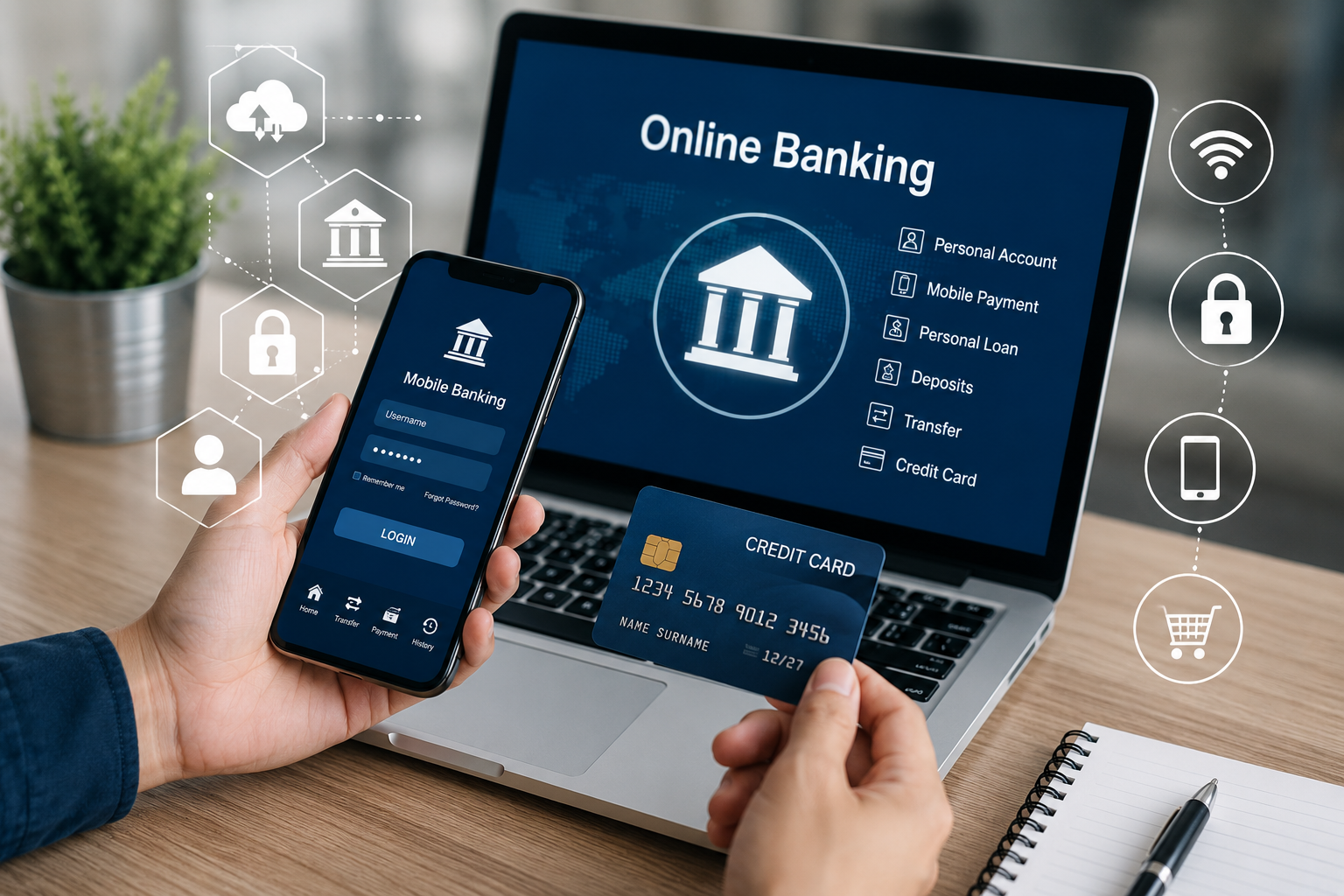

Introduction
Banking has undergone one of the most significant transformations in modern history. From traditional branch-based services to AI-powered digital banking platforms, financial institutions continue to evolve to meet the changing expectations of consumers and businesses. Today, banking is no longer limited to depositing money or applying for loans. It has become a comprehensive financial ecosystem that includes mobile banking, digital payments, investment services, cybersecurity, artificial intelligence, blockchain technology, and personalized financial management.
In 2026, banks around the world are investing billions of dollars in digital transformation. Customers now expect instant transactions, secure online banking, mobile applications, contactless payments, and intelligent financial advice available at their fingertips. At the same time, governments and regulators continue introducing new policies to ensure transparency, data protection, and financial stability.
Whether you’re opening your first bank account, applying for a mortgage, managing a business, or exploring digital banking innovations, understanding today’s banking landscape is essential. This guide explores the latest banking news, emerging digital banking trends, different types of loans, financial services, and what the future holds for one of the world’s most important industries.
What Is Banking?
Banking refers to the business of accepting deposits, safeguarding money, lending funds, facilitating payments, and offering financial products and services to individuals, businesses, and governments. Banks serve as intermediaries between savers and borrowers, helping economies grow through efficient capital allocation.
Modern banks perform far more than traditional financial functions. They now provide:
- Savings and checking accounts
- Business banking solutions
- Personal and commercial loans
- Mortgages
- Credit cards
- Investment management
- Wealth planning
- Insurance products
- Foreign exchange services
- International money transfers
- Digital payment solutions
- Mobile banking apps
- Cryptocurrency-related services in selected markets
Without banks, modern commerce and global trade would struggle to operate efficiently.
Why Banking Matters
Banks play a crucial role in economic development. They encourage savings, support entrepreneurship, finance infrastructure projects, facilitate international trade, and provide liquidity throughout financial markets.
Major benefits of banking include:
Safe Money Storage
Banks protect customer funds using advanced security systems, insurance mechanisms, and regulatory oversight.
Access to Credit
Individuals and businesses rely on bank financing for education, home purchases, business expansion, healthcare, and investments.
Payment Processing
Banks enable fast and secure domestic and international transactions through debit cards, credit cards, wire transfers, mobile wallets, and online payment systems.
Economic Growth
Banks finance businesses that create employment opportunities, increase production, and stimulate economic activity.
Financial Inclusion
Digital banking has expanded access to financial services in rural and underserved communities where physical branches may not exist.
Latest Banking News in 2026
The banking sector continues evolving rapidly as technology, regulations, and customer expectations reshape financial services.
Several major developments are influencing the global banking industry.
Digital Transformation Continues
Banks are replacing legacy systems with cloud-based infrastructure that improves speed, reliability, and scalability.
Financial institutions are investing heavily in:
- Artificial Intelligence
- Machine Learning
- Cloud Computing
- Blockchain Technology
- Big Data Analytics
- Automation
- Robotic Process Automation (RPA)
These technologies improve operational efficiency while reducing costs.
AI Becomes Mainstream
Artificial intelligence now powers many banking operations.
Banks use AI for:
- Fraud detection
- Customer support chatbots
- Credit risk assessment
- Loan approvals
- Personalized investment advice
- Spending analysis
- Financial planning recommendations
AI significantly reduces manual workloads while improving customer experiences.
Stronger Cybersecurity Investments
Cybersecurity remains a top priority as online banking usage increases.
Banks continue strengthening:
- Multi-factor authentication
- Biometric login
- Behavioral analytics
- AI fraud monitoring
- End-to-end encryption
- Real-time transaction monitoring
Protecting customer information has become more important than ever.
Rise of Instant Payments
Consumers increasingly expect payments to be completed within seconds rather than days.
Many countries have expanded real-time payment systems that enable:
- Instant bank transfers
- 24/7 transactions
- Faster payroll processing
- Immediate bill payments
- Cross-border payment improvements
Instant payment infrastructure is becoming the new banking standard.
Green Banking Initiatives
Environmental sustainability has become a major focus.
Banks are reducing paper usage while promoting:
- Digital statements
- Green financing
- Renewable energy projects
- Sustainable investment funds
- Carbon reduction initiatives
Many financial institutions have announced long-term environmental goals.
Types of Banks
Different banks serve different customer needs.
Commercial Banks
Commercial banks offer everyday banking services to individuals and businesses.
Services include:
- Savings accounts
- Current accounts
- Loans
- Credit cards
- Business banking
- Online banking
Examples include national and international retail banks operating across multiple regions.
Investment Banks
Investment banks help corporations and governments raise capital.
Their services include:
- IPO management
- Corporate mergers
- Acquisitions
- Securities trading
- Asset management
- Financial advisory
Investment banks generally do not focus on personal banking.
Central Banks
Central banks regulate monetary policy and supervise commercial banking systems.
Responsibilities include:
- Interest rate decisions
- Inflation management
- Currency issuance
- Financial stability
- Banking regulations
Examples include the Federal Reserve, the European Central Bank, and the Bank of England.
Credit Unions
Credit unions are member-owned financial cooperatives that often provide competitive interest rates and lower service fees.
Digital Banks
Digital banks operate entirely online.
Customers manage their accounts through:
- Mobile apps
- Websites
- Digital customer support
- Video verification
- Electronic documentation
Many digital banks have no physical branches.
Essential Banking Services
Modern banking extends well beyond deposits and withdrawals.
Savings Accounts
Savings accounts help customers grow money through interest while maintaining easy access to funds.
Benefits include:
- Secure savings
- Interest earnings
- Emergency funds
- Low financial risk
Checking Accounts
Checking accounts are designed for daily financial transactions.
Typical features include:
- Debit cards
- Online banking
- Mobile banking
- Bill payments
- Direct deposits
Fixed Deposits
Customers deposit funds for a fixed period in exchange for higher interest rates.
These accounts are ideal for long-term savings goals.
Credit Cards
Credit cards provide revolving credit for purchases.
Modern cards include:
- Cashback rewards
- Travel benefits
- Purchase protection
- Fraud monitoring
- Installment payment options
Responsible usage helps build strong credit histories.
Debit Cards
Debit cards allow customers to spend money directly from their bank accounts.
Advantages include:
- No borrowing
- ATM access
- Contactless payments
- Secure online shopping
Foreign Exchange Services
Banks facilitate currency exchange for:
- International travelers
- Import/export businesses
- Overseas students
- Global investors
Exchange rates vary according to market conditions.
Digital Banking Revolution
Digital banking has transformed how customers interact with financial institutions.
Instead of visiting physical branches, users can complete nearly every banking task through smartphones and computers.
Digital banking now includes:
- Mobile banking apps
- Internet banking
- Digital wallets
- QR code payments
- Online loan applications
- Virtual debit cards
- Digital account opening
- Electronic signatures
- Online customer support
- Instant notifications
Consumers appreciate digital banking because it offers speed, convenience, and 24/7 accessibility.
Benefits of Digital Banking
Convenience
Customers can access their accounts anytime and anywhere without visiting a branch.
Faster Transactions
Payments, transfers, and bill payments are completed within minutes or even seconds.
Lower Costs
Digital banking reduces operational expenses for banks while minimizing fees for customers.
Better Financial Tracking
Banking apps provide spending insights, budgeting tools, transaction histories, and savings goals.
Improved Security
Modern banking apps use advanced security features including:
- Facial recognition
- Fingerprint authentication
- One-time passwords
- Device verification
- AI fraud detection
- Instant transaction alerts
These technologies make digital banking safer than ever before.
Challenges Facing the Banking Industry
Despite significant innovation, banks continue facing multiple challenges.
Cybercrime
Financial institutions remain major targets for hackers, ransomware attacks, phishing campaigns, and identity theft.
Continuous cybersecurity investment is essential.
Regulatory Compliance
Banks must comply with increasingly complex financial regulations covering:
- Anti-money laundering (AML)
- Know Your Customer (KYC)
- Consumer protection
- Data privacy
- International sanctions
Compliance requires substantial investment in technology and staff training.
Competition from Fintech Companies
Financial technology companies offer fast, user-friendly alternatives for payments, lending, investments, and money transfers.
Traditional banks continue modernizing their services to remain competitive.
Rising Customer Expectations
Today’s customers expect:
- Instant service
- Personalized experiences
- Mobile-first banking
- Zero downtime
- Faster loan approvals
- Transparent pricing
Meeting these expectations requires ongoing innovation and investment.
Digital Banking Trends in 2026: AI, Open Banking, Blockchain & the Future of Financial Services
Digital banking is evolving faster than ever. In 2026, banks are embracing advanced technologies to provide faster, safer, and more personalized financial services. Customers now expect instant access to their accounts, real-time payments, intelligent financial insights, and seamless digital experiences across all devices.
The rapid growth of fintech companies has also encouraged traditional banks to innovate. By investing in artificial intelligence, cloud computing, blockchain, and automation, financial institutions are transforming how banking services are delivered.
Below are the most important digital banking trends shaping the global financial industry in 2026.
1. Artificial Intelligence Is Transforming Banking
Artificial Intelligence (AI) has become one of the biggest drivers of innovation in the banking sector. Banks now rely on AI to improve customer service, detect fraud, automate operations, and make faster lending decisions.
AI-powered systems analyze millions of transactions every day to identify unusual activity that may indicate fraud. This allows banks to stop suspicious transactions before customers suffer financial losses.
Banks are also using AI to:
- Approve loans faster
- Analyze customer spending habits
- Recommend savings plans
- Predict financial risks
- Automate document verification
- Improve investment advice
- Personalize banking experiences
AI-powered chatbots have become increasingly sophisticated, providing customers with instant support 24 hours a day without requiring human assistance.
As AI continues to improve, banks are expected to automate even more routine tasks while allowing employees to focus on complex financial services.
2. Mobile Banking Continues to Dominate
Smartphones have become the primary banking device for millions of people worldwide.
Customers can now complete almost every banking task through mobile applications, including:
- Opening new accounts
- Sending money instantly
- Paying utility bills
- Applying for loans
- Depositing checks digitally
- Managing investments
- Blocking lost cards
- Tracking expenses
- Paying through QR codes
- Receiving real-time notifications
Modern banking apps also include budgeting tools that categorize spending and help customers manage their finances more effectively.
Banks continue investing in mobile app improvements because customers increasingly prefer digital convenience over visiting physical branches.
3. Open Banking Is Expanding Worldwide
Open Banking allows customers to securely share their financial data with approved third-party financial service providers.
Instead of keeping banking information isolated within one institution, customers can authorize fintech applications to access selected account information using secure APIs (Application Programming Interfaces).
Benefits of Open Banking include:
- Better financial planning
- Easier loan comparisons
- Faster account verification
- Improved budgeting tools
- Personalized financial recommendations
- Simplified payment services
For businesses, Open Banking reduces payment processing costs while improving transaction speed.
Governments and regulators continue supporting Open Banking initiatives because they increase competition and encourage innovation throughout the financial sector.
4. Blockchain Technology Is Improving Banking
Blockchain technology is gradually becoming part of modern banking infrastructure.
Although cryptocurrencies often receive the most attention, banks are adopting blockchain for many other practical purposes.
Common banking applications include:
- Cross-border payments
- Trade finance
- Digital identity verification
- Smart contracts
- Fraud prevention
- Secure record keeping
- Asset tokenization
Blockchain creates transparent transaction records that are difficult to alter, improving security and reducing fraud risks.
Many international banks continue testing blockchain-based payment systems capable of reducing international transfer times from several days to just minutes.
5. Embedded Finance Is Growing Rapidly
Embedded finance allows financial services to be integrated directly into non-banking platforms.
Instead of visiting a bank website, customers can access financial products while shopping online or using other digital services.
Examples include:
- Buy Now, Pay Later (BNPL)
- In-app insurance
- Integrated payment gateways
- Instant consumer financing
- Digital business lending
- Automated payroll services
Consumers appreciate the convenience of completing purchases and financial transactions without switching between multiple platforms.
Embedded finance is expected to become one of the fastest-growing areas of digital banking over the next decade.
6. Banking-as-a-Service (BaaS)
Banking-as-a-Service enables companies to offer banking products without becoming banks themselves.
Through secure APIs, licensed banks provide financial infrastructure that allows businesses to launch services such as:
- Digital wallets
- Virtual bank accounts
- Payment cards
- Business payments
- Money transfers
- Lending products
This model has accelerated innovation by allowing fintech startups to launch new financial services quickly without building complete banking systems from scratch.
7. Cloud Computing Is Modernizing Banks
Many banks are replacing outdated legacy systems with cloud-based technology.
Cloud computing offers several advantages:
- Lower operational costs
- Better scalability
- Faster software updates
- Improved disaster recovery
- Enhanced security
- Better customer experiences
Cloud infrastructure also allows banks to process larger volumes of transactions while maintaining high system availability.
Hybrid cloud solutions are becoming increasingly common as banks balance security, regulatory compliance, and operational efficiency.
8. Cybersecurity Remains a Top Priority
As digital banking expands, cyber threats continue becoming more sophisticated.
Banks invest heavily in cybersecurity technologies to protect sensitive customer information and financial assets.
Modern security measures include:
Multi-Factor Authentication (MFA)
Customers verify their identity using multiple authentication methods such as passwords, mobile verification codes, or biometric scans.
Biometric Authentication
Fingerprint recognition, facial recognition, and voice authentication improve both convenience and security.
AI Fraud Detection
Artificial intelligence continuously monitors transactions for suspicious behavior.
If unusual activity is detected, transactions can be blocked automatically until verified.
End-to-End Encryption
Sensitive banking information remains encrypted while traveling between customer devices and banking servers.
Behavioral Analytics
Banks analyze customer behavior patterns to detect unauthorized account access.
If login behavior suddenly changes, additional verification may be required.
9. Digital Payments Continue to Replace Cash
Cashless payments continue growing across developed and emerging economies.
Consumers increasingly rely on:
- Contactless cards
- Mobile wallets
- QR code payments
- NFC technology
- Instant bank transfers
- Peer-to-peer payment apps
Businesses benefit from faster transactions, reduced cash handling, and improved financial reporting.
Digital payment adoption accelerated during recent years and continues gaining momentum globally.
10. Sustainability and Green Banking
Banks are supporting environmental sustainability through green banking initiatives.
Many institutions now encourage paperless banking by offering:
- Digital account statements
- Electronic contracts
- Online customer support
- Mobile banking services
- Digital document storage
Banks are also financing renewable energy projects and environmentally responsible businesses.
Green finance has become an important investment priority for many international financial institutions.
Fintech Companies Are Changing Banking
Financial technology companies continue reshaping the banking industry.
Unlike traditional banks, fintech firms often focus on solving specific financial challenges through innovative digital solutions.
Popular fintech services include:
- Online lending
- Digital payments
- Investment platforms
- Personal finance apps
- Cryptocurrency exchanges
- Business accounting software
- Cross-border payments
Rather than competing directly, many banks now partner with fintech companies to improve customer experiences and accelerate innovation.
Benefits of Digital Banking for Customers
Digital banking offers numerous advantages compared to traditional banking methods.
Faster Services
Most banking transactions can now be completed within seconds.
24/7 Availability
Customers can access banking services anytime without depending on branch operating hours.
Better Financial Control
Banking applications provide detailed spending reports, savings goals, and personalized financial insights.
Lower Banking Costs
Digital operations reduce administrative expenses, allowing banks to offer lower fees and competitive financial products.
Improved Accessibility
People living in remote areas can access banking services through smartphones without traveling to physical branches.
Challenges Facing Digital Banking
Despite remarkable progress, digital banking still faces several obstacles.
Data Privacy
Protecting customer data remains one of the industry’s greatest responsibilities.
Banks must comply with strict privacy regulations while ensuring customer information remains secure.
Digital Literacy
Some customers, particularly older generations, may struggle to use advanced digital banking services.
Banks continue investing in education and user-friendly interfaces.
Cyber Threats
Cybercriminals constantly develop new attack methods, requiring continuous investment in cybersecurity.
Legacy Banking Systems
Many traditional banks still rely on outdated technology that limits innovation and increases maintenance costs.
Replacing legacy infrastructure is often expensive and time-consuming.
The Future of Digital Banking
The future of banking will be increasingly digital, intelligent, and customer-focused.
Several technologies are expected to shape the next generation of financial services:
- AI-powered financial advisors
- Voice-controlled banking
- Predictive financial planning
- Fully digital mortgages
- Blockchain-based payment systems
- Central Bank Digital Currencies (CBDCs)
- Quantum-resistant cybersecurity
- Hyper-personalized banking experiences
- Advanced biometric authentication
- Real-time global payment networks
Banks that successfully embrace these innovations will be better positioned to meet changing customer expectations while remaining competitive in an increasingly digital economy.
Digital banking has become the foundation of modern financial services. Artificial intelligence, blockchain, cloud computing, Open Banking, embedded finance, and fintech partnerships are transforming how banks operate and how customers manage their money. These innovations have made banking faster, safer, more convenient, and accessible than ever before.
However, as digital services continue expanding, banks must also address cybersecurity risks, regulatory compliance, and customer privacy concerns. Institutions that successfully balance innovation with security will lead the next era of global banking. In the final part of this guide, we will explore personal and business loans, mortgages, credit cards, wealth management, investment services, financial planning, the future of banking, frequently asked questions, and a comprehensive conclusion.
Loans, Financial Services, Wealth Management & the Future of Banking
Banking is much more than storing money and processing transactions. Modern financial institutions offer a wide range of products designed to help individuals, businesses, and governments achieve their financial goals. From personal loans and mortgages to investment management and retirement planning, banks play a vital role in supporting economic growth and financial stability.
This final section explores the major banking products and services available today, along with practical financial tips, emerging trends, and the future of the global banking industry.
Understanding Bank Loans
A loan is an amount of money borrowed from a bank or financial institution that must be repaid over time with interest. Loans help people finance large expenses without paying the full amount upfront.
Banks evaluate several factors before approving a loan, including income, employment status, credit history, existing debts, and repayment capacity.
Personal Loans
Personal loans are unsecured loans that can be used for almost any purpose.
Common uses include:
- Medical expenses
- Home improvements
- Weddings
- Education
- Travel
- Emergency expenses
- Debt consolidation
Since personal loans are generally unsecured, interest rates may be higher than secured loans.
Home Loans and Mortgages
A mortgage allows individuals to purchase property by borrowing money from a bank.
The property serves as collateral until the loan is fully repaid.
Benefits include:
- Home ownership
- Long repayment periods
- Competitive interest rates
- Flexible repayment options
- Fixed or variable interest rates
Before approving a mortgage, banks usually assess:
- Income stability
- Credit score
- Down payment amount
- Debt-to-income ratio
- Property value
Auto Loans
Auto loans help customers purchase new or used vehicles.
Features often include:
- Fixed monthly payments
- Flexible repayment terms
- Competitive financing
- Fast approval process
Many dealerships work directly with banks to simplify vehicle financing.
Business Loans
Business loans provide funding for entrepreneurs and companies seeking to expand operations.
Businesses commonly use loans for:
- Equipment purchases
- Inventory
- Hiring employees
- Marketing campaigns
- Office expansion
- Working capital
- Technology upgrades
Banks may also offer specialized financing for startups, agriculture, manufacturing, healthcare, and export businesses.
Student Loans
Student loans help finance higher education expenses, including:
- Tuition fees
- Books
- Accommodation
- Living expenses
- Educational equipment
Some governments subsidize student loans to encourage educational development.
Credit Cards: Benefits and Responsible Use
Credit cards remain one of the most popular banking products.
When used responsibly, they provide convenience, security, and financial flexibility.
Advantages of Credit Cards
- Interest-free periods on eligible purchases
- Cashback rewards
- Travel points
- Purchase protection
- Fraud monitoring
- Emergency spending access
- Online shopping convenience
Responsible Credit Card Practices
To maintain healthy finances:
- Pay balances on time
- Avoid unnecessary debt
- Monitor monthly statements
- Keep credit utilization low
- Protect card information
- Report lost cards immediately
Good credit card management can improve your credit score and make future borrowing easier.
Business Banking Services
Businesses require specialized banking solutions beyond standard personal accounts.
Common business banking services include:
Business Current Accounts
Designed for daily business transactions, payroll, supplier payments, and customer receipts.
Merchant Payment Solutions
Banks provide payment processing systems that allow businesses to accept:
- Credit cards
- Debit cards
- Contactless payments
- QR code payments
- Mobile wallet transactions
Cash Management
Cash management services help businesses optimize liquidity through:
- Automated collections
- Payroll services
- Treasury management
- Real-time reporting
- International payments
Trade Finance
Banks facilitate international trade through:
- Letters of credit
- Import financing
- Export financing
- Invoice financing
- Supply chain financing
These services reduce risks associated with global commerce.
Investment and Wealth Management
Banks increasingly provide investment services to help customers grow their wealth over time.
Professional advisors assist clients in selecting investment strategies based on their financial objectives and risk tolerance.
Common investment products include:
- Mutual funds
- Government bonds
- Corporate bonds
- Exchange-traded funds (ETFs)
- Retirement accounts
- Fixed-income investments
- Equity portfolios
Wealth management services often include estate planning, tax planning, retirement planning, and portfolio diversification.
Insurance Services Offered by Banks
Many banks partner with insurance providers to offer financial protection products.
Popular insurance options include:
- Life insurance
- Health insurance
- Travel insurance
- Vehicle insurance
- Home insurance
- Business insurance
Bundling banking and insurance services provides customers with greater convenience.
International Banking Services
Globalization has increased demand for international banking.
Banks now provide services such as:
- Foreign currency accounts
- International wire transfers
- Multi-currency debit cards
- Foreign exchange services
- International trade financing
- Overseas investment support
These services simplify international business and personal financial management.
Financial Planning and Money Management
Effective financial planning helps individuals achieve both short-term and long-term financial goals.
Banks often provide financial planning tools within their mobile applications.
Practical Financial Tips
- Create a monthly budget.
- Build an emergency fund.
- Save regularly.
- Avoid unnecessary debt.
- Monitor your credit score.
- Invest for long-term growth.
- Diversify investments.
- Review financial goals annually.
- Protect accounts with strong passwords.
- Enable multi-factor authentication.
Consistent financial discipline leads to greater financial security over time.
How to Choose the Right Bank
Selecting the right bank depends on your personal and financial needs.
Consider the following factors before opening an account.
Account Fees
Compare:
- Monthly maintenance fees
- ATM charges
- Transfer fees
- Foreign transaction fees
- Overdraft fees
Digital Banking Features
Look for banks that provide:
- Mobile banking apps
- Instant notifications
- Online account management
- Mobile deposits
- Secure authentication
- Digital customer support
Interest Rates
Compare savings account returns, fixed deposit rates, and loan interest rates before making decisions.
Customer Service
Reliable customer support is essential, particularly during emergencies involving cards, fraud, or payment issues.
Security
Choose banks that prioritize:
- Encryption
- Fraud detection
- Biometric authentication
- Secure online banking
- Deposit protection
The Future of Banking
The banking industry will continue evolving rapidly throughout the coming decade.
Several innovations are expected to redefine financial services.
Artificial Intelligence Everywhere
AI will provide increasingly personalized financial recommendations based on customer behavior and spending patterns.
Voice Banking
Customers may perform transactions using voice assistants through secure authentication systems.
Digital Identity Verification
Paper documents will continue disappearing as digital identity verification becomes more common.
Central Bank Digital Currencies (CBDCs)
Many governments are exploring official digital currencies that could transform payment systems.
CBDCs may improve financial inclusion, reduce payment costs, and increase transaction efficiency.
Hyper-Personalized Banking
Banks will use advanced analytics to deliver customized financial products based on customer needs.
Examples include:
- Personalized loan offers
- Automated investment strategies
- Smart savings recommendations
- Customized insurance packages
Sustainable Banking
Environmental responsibility will remain a strategic priority.
Banks are expected to finance:
- Renewable energy
- Green transportation
- Sustainable housing
- Clean technology
- Climate-related projects
Common Banking Mistakes to Avoid
Many financial problems result from avoidable mistakes.
Avoid these common errors:
- Ignoring your credit score
- Missing loan payments
- Overspending with credit cards
- Sharing banking passwords
- Falling for phishing scams
- Borrowing more than necessary
- Not maintaining emergency savings
- Failing to review bank statements
- Using weak online passwords
- Ignoring investment diversification
Developing responsible financial habits can significantly improve long-term financial well-being.
Frequently Asked Questions (FAQs)
1. What is digital banking?
Digital banking allows customers to access banking services through mobile apps and online platforms without visiting a physical branch.
2. Is online banking safe?
Yes. Most banks use advanced encryption, biometric authentication, multi-factor authentication, and fraud detection systems to protect customer information.
3. What is the difference between a debit card and a credit card?
A debit card uses money already available in your bank account, while a credit card allows you to borrow money up to an approved credit limit.
4. What factors affect loan approval?
Banks typically consider your income, employment history, credit score, existing debts, repayment capacity, and financial stability.
5. What is Open Banking?
Open Banking allows customers to securely share financial information with authorized third-party providers to access innovative financial services.
6. How can I improve my credit score?
Pay bills on time, reduce outstanding debt, maintain low credit utilization, and avoid applying for excessive new credit.
7. Why are mobile banking apps becoming more popular?
They provide convenient access to accounts, instant payments, budgeting tools, security alerts, and 24/7 banking services.
8. What is a fixed deposit?
A fixed deposit is a savings product where money is deposited for a specified period in exchange for a guaranteed interest rate.
9. What are the benefits of business banking?
Business banking offers payment processing, payroll management, business loans, cash management, trade finance, and financial reporting tools.
10. What is the future of banking?
The future of banking includes artificial intelligence, blockchain technology, cloud computing, embedded finance, digital currencies, personalized financial services, and enhanced cybersecurity.
Final Thoughts
The banking industry is experiencing one of the most significant transformations in its history. Digital innovation has changed the way individuals and businesses interact with financial institutions, making banking faster, smarter, and more accessible than ever before. Technologies such as artificial intelligence, blockchain, cloud computing, and mobile banking continue to improve customer experiences while increasing efficiency and security.
At the same time, traditional banking services—including savings accounts, loans, mortgages, investment management, and business banking—remain essential to supporting personal financial goals and global economic growth. As customer expectations evolve, banks are focusing on personalization, cybersecurity, sustainability, and seamless digital experiences to remain competitive in an increasingly connected world. Whether you are managing your personal finances, growing a business, or planning long-term investments, understanding modern banking trends and financial services can help you make informed decisions and build a stronger financial future. The banks that successfully combine innovation, trust, and customer-centric solutions will shape the future of global finance for years to come.



-
-
-
-
-
Show Comments[…] become increasingly difficult. Every day, thousands of new websites publish articles on technology, finance, health, business, and lifestyle, making it challenging for readers to determine which sources are […]
[…] Finance […]
[…] Companies invest in research and development to gain a competitive advantage, leading to technological progress across industries. […]
[…] Financial information is no longer limited to newspapers or television broadcasts. Modern professionals rely on specialized digital platforms that provide industry-focused reporting, expert analysis, and market commentary. […]
[…] Dependency: Use offline modes where available or have backup […]