

Securing reliable capital remains one of the biggest hurdles for founders and growing companies across the United Kingdom. While high-street bank loans are still an option, stricter lending criteria and shifting interest rates mean many entrepreneurs now look toward government-backed schemes, regional grants, and modern digital finance.
Understanding which funding route matches your business stage—and knowing how to prepare your financial records—can make the difference between a stalled launch and sustainable growth.
1 Government-Backed Start Up Loans
For early-stage founders and businesses trading for less than 36 months, the British Business Bank’s Start Up Loans programme remains one of the most accessible funding sources in the UK.
- Loan Amount: Between £500 and £25,000 per co-founder (up to £100,000 per business).
- Interest Rate: Fixed at 6% per annum with repayment terms of 1 to 5 years.
- Added Value: Successful applicants receive 12 months of free mentoring alongside business plan support.
- Key Advantage: No early repayment fees or application charges.
2 Innovation and R&D Grants (Innovate UK)
Unlike loans, grants do not need to be repaid and do not dilute your company’s equity. Innovate UK regularly opens sector-specific funding competitions for UK-registered businesses developing new technologies, sustainable products, or innovative processes.
- Smart Grants: Open to UK SMEs across any sector with commercially viable, game-changing ideas.
- Regional Growth Funds: Local Enterprise Partnerships (LEPs) and combined authorities—such as those in Greater Manchester, the West Midlands, and Scotland—frequently offer matched-funding grants for job creation and digital upgrades.
- Important Caveat: Most UK grants work on a reimbursement basis, meaning you must spend the money first and claim it back using paid invoices. Maintaining healthy liquidity is essential—see our guide on why cash flow is critical for every small business in the UK to plan around reimbursement delays.
3 Alternative & Digital Business Finance
Traditional banks often take weeks to approve commercial credit. Today, fintech lenders and challenger banks offer faster, data-driven financing tailored to modern trading cycles—a shift covered in our breakdown of digital banking trends, loans, and financial services.
| Funding Type | Best For | Typical Speed | Key Consideration |
| Invoice Finance | B2B firms waiting 30–90 days for client payments | 24 to 72 hours | Unlocks up to 85%–90% of unpaid invoice value immediately |
| Asset Finance | Purchasing vehicles, machinery, or IT hardware | 3 to 7 days | Equipment itself acts as security for the loan |
| Merchant Cash Advance | Retail and hospitality with steady card sales | 24 to 48 hours | Repayments flex automatically as a percentage of daily card revenue |
| Revolving Credit Facility | Managing seasonal dips and short-term gaps | 1 to 3 days | Interest is charged only on the funds you actually draw down |
4 Tax Relief Schemes That Boost Working Capital
Before taking on external debt, UK limited companies should check whether they qualify for HMRC tax incentives that directly reduce corporation tax bills:
- R&D Tax Relief: Available to companies solving scientific or technological uncertainties, even if a project did not succeed.
- Annual Investment Allowance (AIA): Allows businesses to deduct 100% of qualifying plant and machinery expenditure from taxable profits up to £1 million.
- SEIS and EIS: The Seed Enterprise Investment Scheme (SEIS) and Enterprise Investment Scheme (EIS) make early-stage startups far more attractive to angel investors by offering generous income tax and capital gains reliefs.
How to Prepare a Strong Funding Application
Lenders and grant assessors reject thousands of UK applications every year due to incomplete financial documentation. Before applying, organize four core documents:
- Up-to-Date Management Accounts: Profit and loss statements and balance sheets from the past 6 to 12 months.
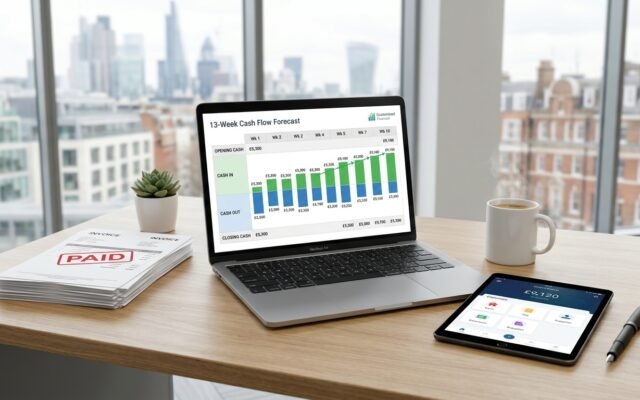
- 13-Week Cash Flow Forecast: Proof that your business can manage monthly repayments or cover upfront grant expenses.
- Clear Use-of-Funds Breakdown: Exact quotes showing how every pound will generate revenue, cut costs, or create jobs.
- Clean Credit & Companies House Filings: Ensure annual accounts and confirmation statements are filed on time with no overdue notices.
Frequently Asked Questions
Are UK small business grants completely free money?
Yes, grants do not require repayment or equity share. However, most require matched funding (where you contribute 30% to 50% of project costs) and strict reporting milestones.
Can I get a business loan in the UK with a short trading history?
Yes. While high-street banks usually ask for two years of filed accounts, Start Up Loans, fintech lenders, and invoice finance providers evaluate recent bank statements and cash flow projections instead.
Which UK body helps verify legitimate funding schemes?
Always check official listings through GOV.UK’s Business Finance Support Finder or the British Business Bank before paying any third-party broker fees.
Conclusion
The UK offers a diverse funding landscape for small businesses in 2026, from government-backed Start Up Loans and Innovate UK grants to flexible digital credit lines. By matching the right capital type to your operational goals—and keeping accurate financial forecasts ready—you can secure funding on sustainable terms without putting daily cash flow at risk.



2 Comments