
Introduction
Parents today have more educational resources available than ever before. From interactive learning platforms to digital worksheets and educational games, the internet offers countless opportunities to help children develop essential skills. However, finding a trustworthy website that combines learning, creativity, and child-friendly content can be challenging.
One platform that has attracted attention is thomsonkids.com. Many parents, teachers, and caregivers are curious about what the website offers, who it is designed for, and whether it provides value for children’s learning in 2026. As digital education continues to evolve, choosing reliable online resources has become more important than ever.
This guide explores everything you need to know about thomsonkids.com, including its features, educational value, safety considerations, and practical ways families can make the most of online learning resources. Whether you’re looking for supplementary educational materials or simply researching the platform, this article provides an objective overview to help you make informed decisions.
What Is thomsonkids.com?
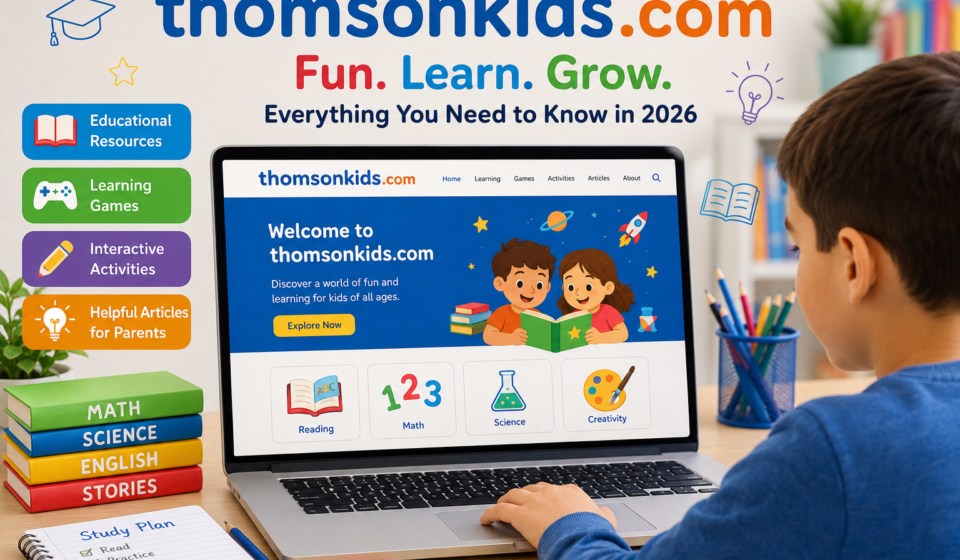
thomsonkids.com is an educational-focused website that aims to provide useful learning resources, activities, and child-friendly content for young learners. While every educational platform has its own strengths and focus, websites like this generally seek to make learning engaging, interactive, and accessible for both children and parents.
Modern educational websites often combine traditional teaching methods with digital tools. Instead of relying solely on textbooks, children can reinforce their knowledge through visual lessons, printable activities, quizzes, games, and educational articles.
For busy families, having online educational resources available at any time offers flexibility that traditional learning materials cannot always provide.
Why Educational Websites Matter in 2026
Technology has transformed how children learn. Classrooms increasingly incorporate digital resources alongside conventional teaching, while many parents use educational websites to support learning at home.
Some of the biggest advantages include:
- Flexible learning schedules
- Interactive educational experiences
- Access to updated learning materials
- Personalized learning opportunities
- Improved digital literacy
- Better engagement through multimedia content
Rather than replacing teachers, educational websites serve as valuable supplementary resources that help reinforce classroom learning.
Key Features of thomsonkids.com
Every educational website is different, but successful platforms generally include several essential features that benefit children and parents alike.
Child-Friendly Learning Resources
One of the most important qualities of an educational website is providing age-appropriate content.
Children learn best when lessons are presented in a simple, engaging format. Educational articles, colorful visuals, interactive exercises, and easy-to-follow explanations help maintain attention while improving understanding.
High-quality educational platforms focus on making complex topics easier to understand rather than overwhelming young learners.
Interactive Activities
Interactive learning encourages children to participate rather than simply read information.
Examples include:
- Educational quizzes
- Memory games
- Vocabulary challenges
- Math exercises
- Reading comprehension activities
- Creative problem-solving tasks
Interactive activities also help children retain information more effectively because they actively apply what they learn.
Educational Articles
Many parents appreciate websites that publish informative articles explaining educational concepts in simple language.
These articles may cover topics such as:
- Early childhood development
- Reading improvement
- Study habits
- Creative learning techniques
- Science experiments
- Healthy learning routines
Well-written educational articles allow parents to better support their children’s academic growth.
Learning Through Play
Experts widely agree that children often learn best through play.
Educational games combine entertainment with learning objectives, helping children develop:
- Critical thinking
- Memory
- Language skills
- Mathematical reasoning
- Creativity
- Decision-making
When learning feels enjoyable, children are more likely to remain motivated.
Parent-Friendly Resources
Educational websites are not only designed for children.
Parents often benefit from resources that explain:
- Homework support strategies
- Learning milestones
- Age-appropriate educational activities
- Screen time management
- Reading recommendations
- Home learning ideas
Providing guidance for parents creates a more complete educational experience.
Who Can Benefit from thomsonkids.com?
Educational platforms are useful for a wide variety of users.
Parents
Parents can use online educational materials to reinforce classroom learning, discover creative activities, and support children who need additional practice.
Digital resources are especially helpful during school holidays when children may benefit from continued learning.
Teachers
Teachers frequently use educational websites to find inspiration for classroom activities, printable worksheets, discussion topics, and creative lesson ideas.
Online materials can supplement existing lesson plans while saving preparation time.
Homeschooling Families
Homeschooling continues to grow across the USA and UK.
Families educating children at home often combine textbooks with digital educational platforms to create more engaging lessons.
Interactive resources help maintain children’s attention while covering important academic subjects.
Students
Children themselves benefit from interactive learning opportunities.
Educational websites provide additional practice outside school, allowing students to strengthen weak areas while exploring subjects that interest them.
What Makes a Good Educational Website?
Not every educational website offers the same quality. Before using any platform, parents should evaluate several important factors.
Accurate Information
Educational content should be factually correct, regularly updated, and aligned with accepted educational standards.
Reliable information builds trust and supports effective learning.
Easy Navigation
Young learners should be able to find resources without becoming frustrated.
Clear menus, simple layouts, and organized categories improve the overall learning experience.
Safe User Experience
Parents should always supervise younger children when using online educational resources.
A trustworthy website should prioritize user safety, privacy, and appropriate content suitable for children.
Engaging Content
Children naturally lose interest when educational materials are too difficult or overly text-heavy.
High-quality platforms use images, interactive elements, videos, and activities to keep learning enjoyable.
How to Make the Most of thomsonkids.com
Simply visiting an educational website is not enough to maximize learning. Parents, teachers, and students can achieve better results by using the platform consistently and purposefully.
Here are several practical ways to get the most value from educational resources.
Create a Learning Schedule
Consistency helps children build strong study habits.
Instead of spending several hours online once a week, encourage short learning sessions of 20–30 minutes each day. This approach keeps children engaged without causing fatigue.
For example, a child might spend Monday practicing reading, Tuesday solving math exercises, Wednesday exploring science topics, and Thursday completing creative activities.
Set Learning Goals
Every study session should have a clear objective.
Goals might include:
- Learning five new vocabulary words
- Completing a reading exercise
- Solving ten math problems
- Finishing an educational quiz
- Reading one informative article
Clear goals help children stay focused and motivated.
Encourage Independent Learning
One of the greatest advantages of educational websites is that they promote self-directed learning.
Parents should guide children when necessary but also encourage them to explore topics independently. This builds confidence, curiosity, and problem-solving skills.
Combine Online and Offline Activities
Digital learning should not replace hands-on experiences.
For example, after reading about plants, children can grow seeds at home. After learning basic math concepts, parents can practice counting using household items.
Combining digital lessons with real-world activities strengthens understanding and improves memory.
Track Progress
Keeping a record of completed lessons helps children see their improvement over time.
Parents can create a simple checklist or reward system that celebrates consistency rather than perfection.
Small achievements encourage long-term motivation.
Practical Tips for Parents
Parents play an essential role in helping children use educational websites effectively.
Choose Age-Appropriate Content
Every child learns differently.
Select lessons that match your child’s current ability rather than choosing material that is too easy or too advanced.
Encourage Questions
Learning becomes more meaningful when children ask questions.
Discuss what they learned after each session and encourage them to explain concepts in their own words.
Limit Screen Time
Educational screen time is valuable, but balance is important.
Children also need physical activity, outdoor play, reading, and family interaction to support healthy development.
Read Together
Reading educational articles together improves comprehension and builds vocabulary.
Shared reading also creates opportunities for discussion and strengthens parent-child relationships.
Celebrate Progress
Positive reinforcement increases motivation.
Praise effort, consistency, and curiosity rather than focusing only on perfect scores.
Common Mistakes to Avoid
Even excellent educational resources may be less effective if they are used incorrectly.
Here are some common mistakes families should avoid.
Expecting Instant Results
Learning is a gradual process.
Children develop new skills through consistent practice over weeks and months rather than overnight.
Patience is essential.
Using Online Learning Without Supervision
Although many educational websites are designed for children, younger users still benefit from parental guidance.
Parents can answer questions, explain difficult concepts, and ensure children remain focused.
Overloading Children
Trying to complete too many lessons in one sitting often reduces attention and retention.
Short, focused sessions are usually much more productive.
Ignoring Individual Interests
Every child has unique strengths and interests.
Allow children to explore topics they genuinely enjoy while gradually introducing more challenging subjects.
Interest naturally increases motivation.
Depending Only on Digital Resources
Technology is an excellent learning tool, but it should complement—not replace—books, classroom instruction, creative play, and real-life experiences.
A balanced approach produces the best educational outcomes.
Benefits of Using Educational Platforms Like thomsonkids.com
Educational websites continue to grow in popularity because they offer flexibility, accessibility, and engaging learning experiences.
When used appropriately, platforms like thomsonkids.com can provide several advantages.
Flexible Learning
Children can access educational materials from home, during travel, or after school.
Learning is no longer limited to the classroom.
Personalized Learning Pace
Every child learns differently.
Online educational resources allow children to review lessons as many times as needed without feeling pressured.
Improved Digital Skills
Technology is becoming increasingly important in education and future careers.
Using educational platforms responsibly helps children become more confident with digital tools while developing essential computer skills.
Increased Motivation
Interactive quizzes, colorful visuals, and engaging activities often make learning more enjoyable than traditional worksheets alone.
Children are more likely to remain interested when lessons feel interactive.
Support for Classroom Education
Educational websites reinforce topics already taught in school.
Additional practice helps improve understanding and builds confidence before exams or classroom assessments.
Convenience for Families
Busy parents appreciate having educational resources available anytime.
Instead of searching across multiple websites, families can use a single platform to support daily learning routines.
How Educational Technology Is Evolving in 2026
Digital education continues to advance rapidly.
Modern educational websites increasingly incorporate features designed to improve engagement and learning outcomes.
Some important trends include:
Personalized Learning Experiences
Many platforms now recommend lessons based on a child’s age, interests, and previous learning progress.
This creates a more customized educational journey.
Interactive Multimedia
Educational content increasingly combines text, illustrations, animations, videos, and interactive exercises to accommodate different learning styles.
Mobile Accessibility
Parents and students expect educational resources to work smoothly across smartphones, tablets, laptops, and desktop computers.
Responsive design has become an essential feature.
Continuous Content Updates
Reliable educational platforms regularly publish new learning materials to keep information current and relevant.
Updated resources ensure children continue learning from accurate, high-quality content.
Frequently Asked Questions (FAQs)
1. What is thomsonkids.com?
thomsonkids.com is an educational-focused website that provides learning resources, informative content, and child-friendly materials designed to support children’s education. Parents and teachers can use it as a supplementary learning resource alongside school education.
2. Is thomsonkids.com suitable for children of all ages?
Educational websites typically offer content for different age groups. Parents should always review the available materials and select lessons that match their child’s age, learning level, and interests for the best experience.
3. Can parents use thomsonkids.com for homeschooling?
Yes. Families who homeschool can use educational websites as additional learning resources. Interactive activities, educational articles, and practice exercises can help reinforce daily lessons and make learning more engaging.
4. Is online educational learning effective?
Yes, when combined with traditional education and parental guidance. Interactive digital learning can improve motivation, reinforce classroom concepts, and help children practice important academic skills at their own pace.
5. How can parents maximize the benefits of educational websites?
Parents should create a regular study schedule, supervise younger children, encourage discussions about what they learn, combine online learning with offline activities, and celebrate consistent progress rather than focusing only on grades.
Conclusion
As digital education continues to evolve, online learning platforms have become valuable tools for supporting children’s academic growth. thomsonkids.com represents the type of educational resource many parents and educators seek—one that encourages learning through engaging, accessible, and child-friendly content.
While no single website can replace quality classroom instruction or parental involvement, educational platforms can significantly enhance a child’s learning journey when used responsibly. Creating structured study routines, selecting age-appropriate materials, balancing screen time with offline activities, and encouraging curiosity all contribute to a more rewarding educational experience.
Whether you’re a parent searching for additional learning resources, a teacher looking for classroom inspiration, or a homeschooling family exploring digital education, thomsonkids.com can serve as a helpful supplement to traditional learning methods. The key is to use educational technology thoughtfully and consistently while keeping children’s individual learning needs at the center of every decision.
As we move further into 2026, digital education will continue to grow, offering even more opportunities for personalized and interactive learning. By choosing reliable educational resources and maintaining healthy learning habits, families can help children develop the knowledge, confidence, and critical thinking skills needed for future success.